
Start with the cause, not the hardware
A dragging door does not automatically need a new door—or a continuous hinge. Adjustment can help when the existing support and frame are sound. Worn hardware may need replacement; a damaged door or frame may need more extensive work. The right repair starts by finding why the clearances have changed.
This guide focuses on hinged commercial entrances. We use four DoorWin projects in Toronto and the GTA to explain the difference between realignment, new continuous-hinge installation and service to an existing hinge. For an assessment of your opening, see our sagging and dragging door service.
What a sagging or misaligned door can look like
A hinge-side fault may show up on the opposite edge: the latch misses its strike, the bottom corner catches the threshold, or the gap at the top becomes uneven. These are useful clues, not a diagnosis by themselves.
The bottom corner scrapes
We look at the hinge or pivot support, fixings, door position and the actual point of contact. A raised threshold, floor obstruction or damaged sweep can also cause rubbing.
The latch no longer lines up
The lock may be working but meeting the strike at the wrong height. We check the door position before treating this as a lock failure.
The gaps around the door change
Uneven clearances can point to wear, loose attachment, movement in the frame or damage to the door itself. The opening needs to be assessed as a whole.
The door is harder to close
We separate physical binding from a closing-control problem. Making the closer push harder is not a substitute for correcting a door that rubs.
For sliding patio or automatic sliding doors, the mechanism is different. Tracks, rollers and drive components need their own assessment; the continuous-hinge examples below are not repairs for sliding systems.
What does a continuous geared hinge change?
A continuous hinge runs along the height of the door. A geared continuous hinge uses intermeshing gear profiles rather than the central pin arrangement found in a conventional pin-and-barrel hinge. Its length provides support along the hinge side instead of concentrating attachment at a few separate hinge locations. SELECT describes this load-distribution principle in its technical history of geared hinges.
For a suitable heavy or frequently used entrance, that support can be part of a repair that retains the existing door. It still needs the correct model, secure attachment and enough clearance to operate. A full-height hinge cannot make a weak frame sound or straighten every damaged door.
“Piano hinge” is sometimes used loosely for a long hinge, but it does not identify the same construction or specification as a commercial geared hinge. We confirm the actual hinge type and compatibility rather than ordering from the nickname alone.
See our continuous hinge repair and installation options for the component service. Manufacturer references here explain the technology; they do not identify the brand installed in the projects below.
When is adjustment enough—and when is it not?
Compatibility includes the door material, size and weight, the mounting surface, swing clearance and connected hardware. Rated openings and doors with automatic operators need additional checks against the applicable assembly and manufacturer instructions. SELECT publishes model-specific installation guidance; there is no single drilling pattern or adjustment that fits every hinge.
Four DoorWin projects: installation is not always the same repair
The first three projects below included new full-height continuous geared hinges. The fourth involved service to a hinge already on the door. Together, they show why the repair should follow the condition of the opening rather than a one-size-fits-all solution.
Toronto · New hinge + realignment
A business entrance that was getting harder to close
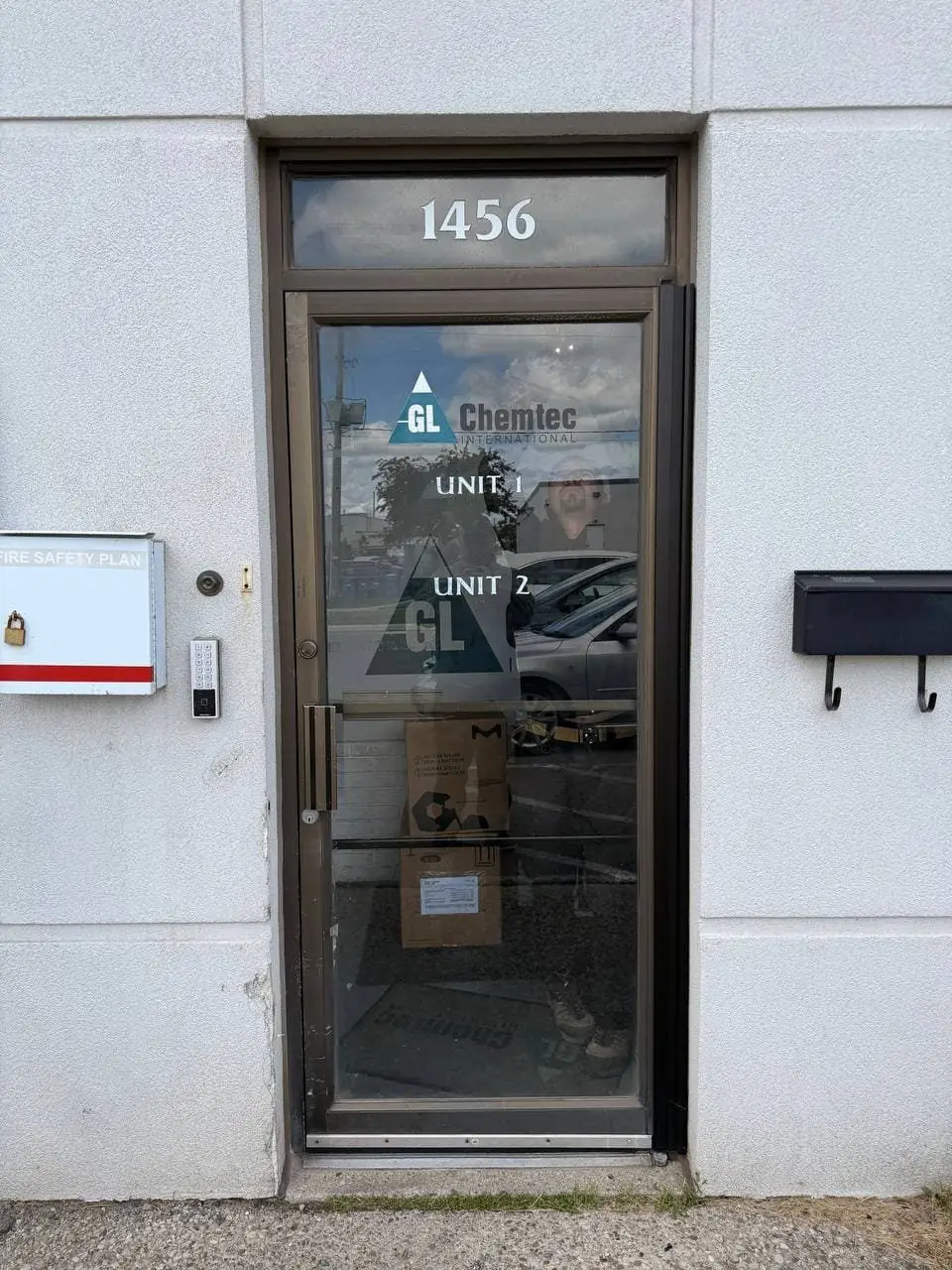
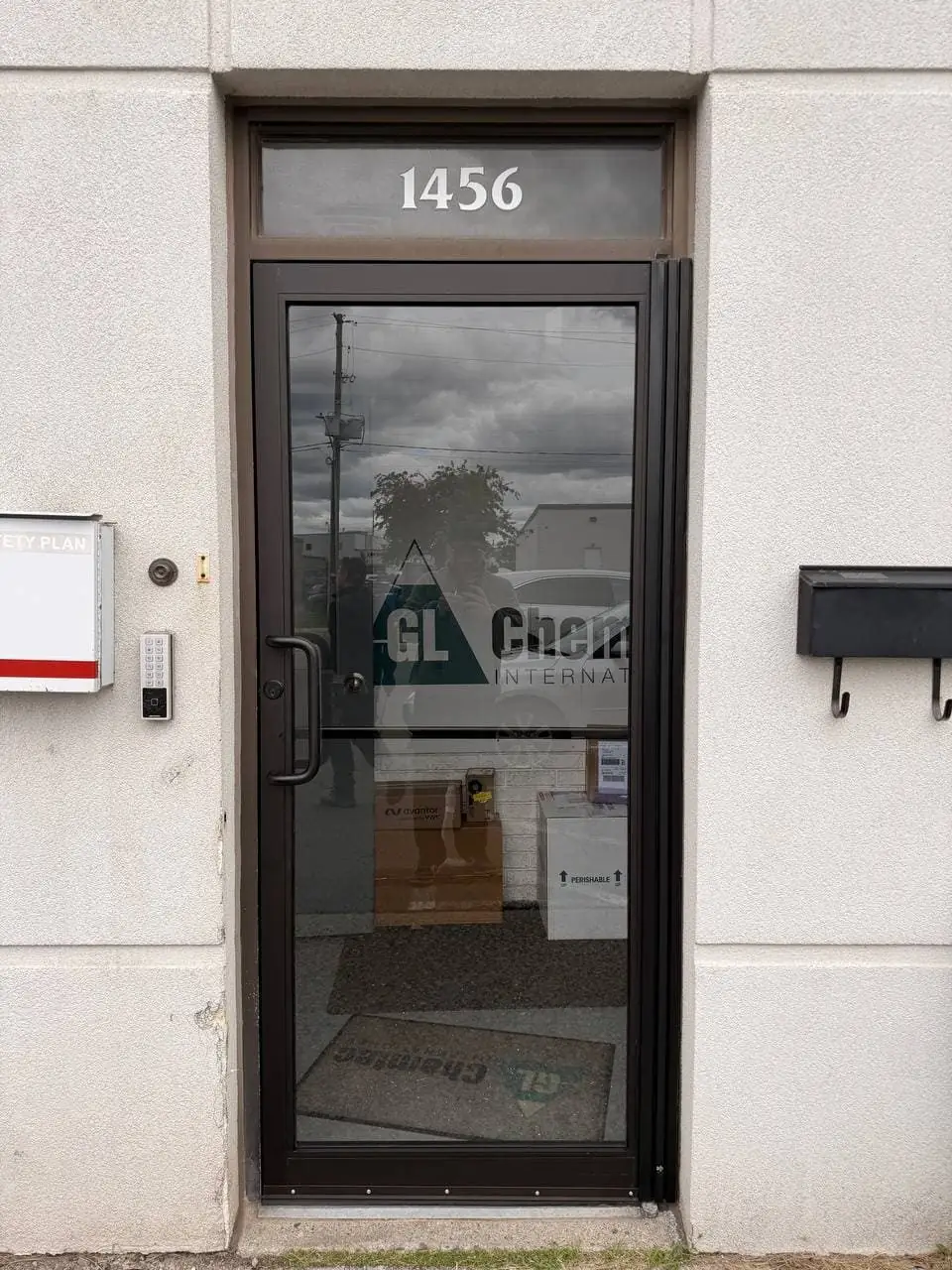
At this Toronto entrance, worn hinge hardware was associated with uneven movement and increasing difficulty closing the door. We removed the worn hardware, installed a full-length continuous geared hinge and realigned the door. Opening and closing were checked after the work.
What this example shows: the job was more than repositioning the lock. The support hardware and the door alignment were addressed together.
View the Toronto hinge installation and realignment project →
Richmond Hill · One active leaf
Supporting the active leaf of a heavy steel double door
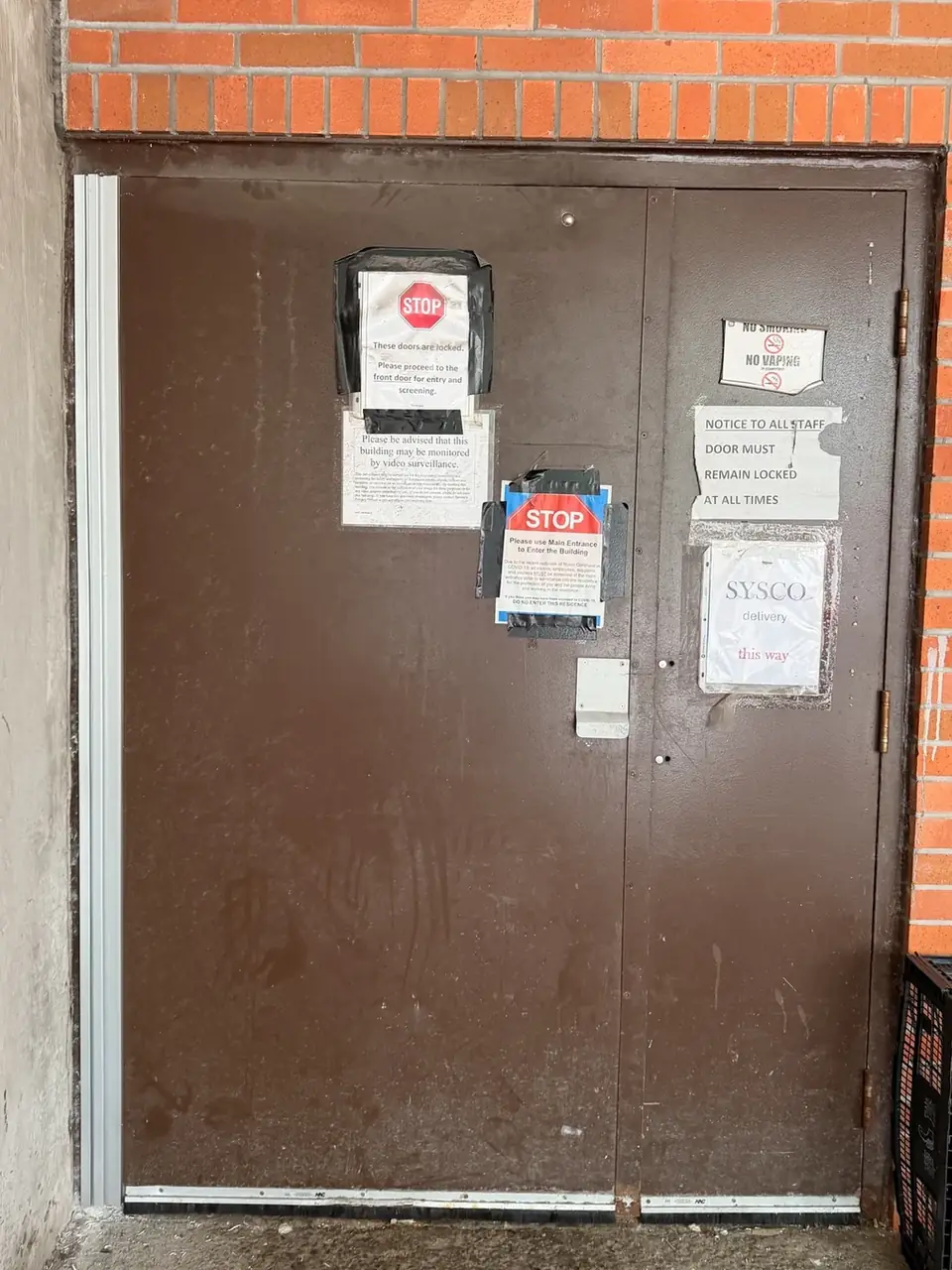
At this Richmond Hill property, the heavy active leaf—the door leaf used for normal passage—needed better support. We retained the existing steel door and frame and installed one full-height continuous geared hinge on that active leaf.
We checked swing, alignment, closing movement and clearance to the frame. This was not a replacement of both leaves or a new hinge on every part of the double-door opening.
What this example shows: a double-door project still needs a precise scope. The supporting hardware can be changed on the affected leaf without describing the work as a complete new entrance.
Mississauga · Two separate entrances
One new continuous hinge on each of two aluminum doors
Two aluminum business entrance doors at one Mississauga property needed the same hinge repair. During one service visit, we installed two full-height continuous geared hinges in total: one per door. Each opening was checked separately for movement, alignment, clearance and closing action.
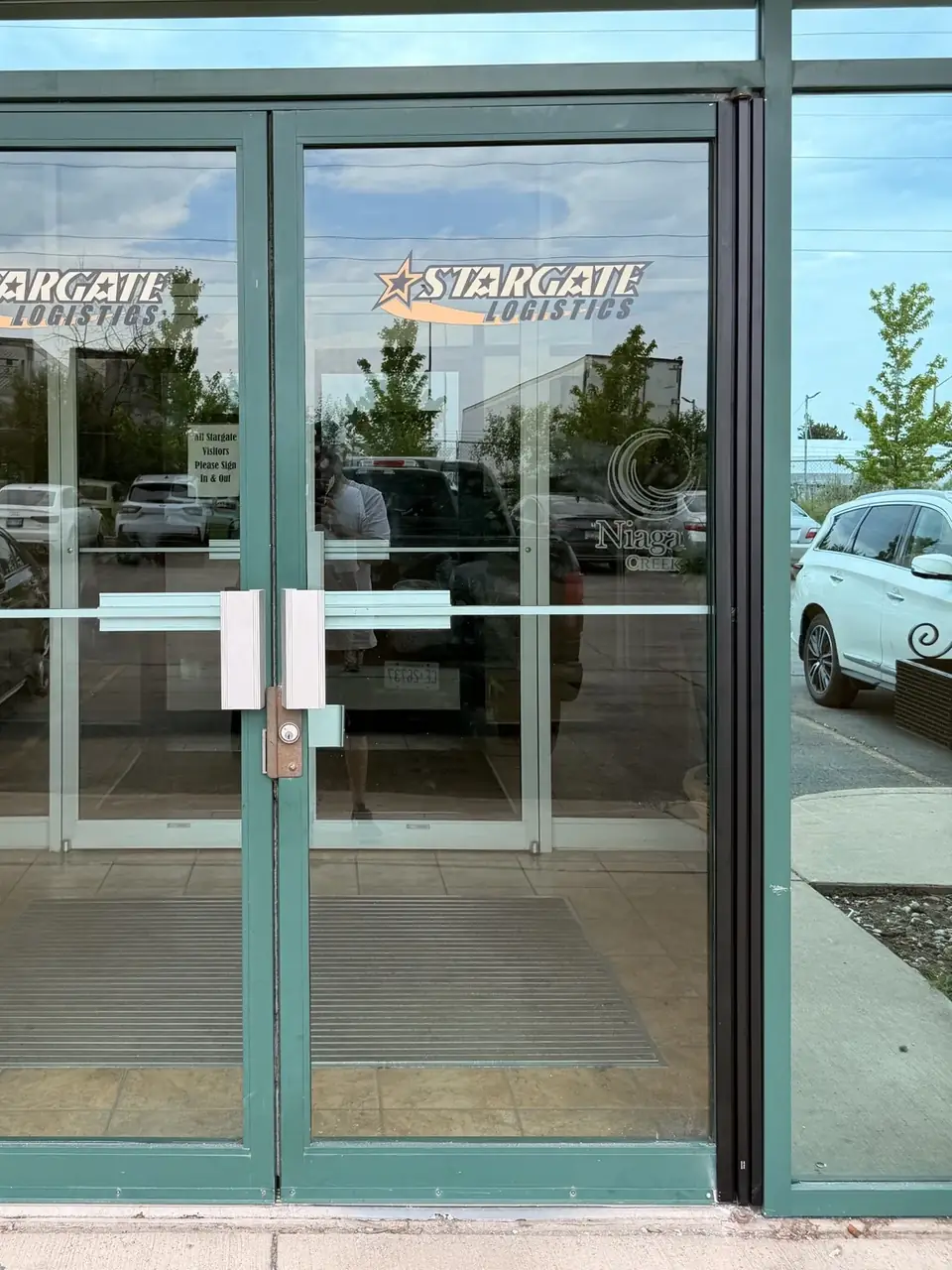
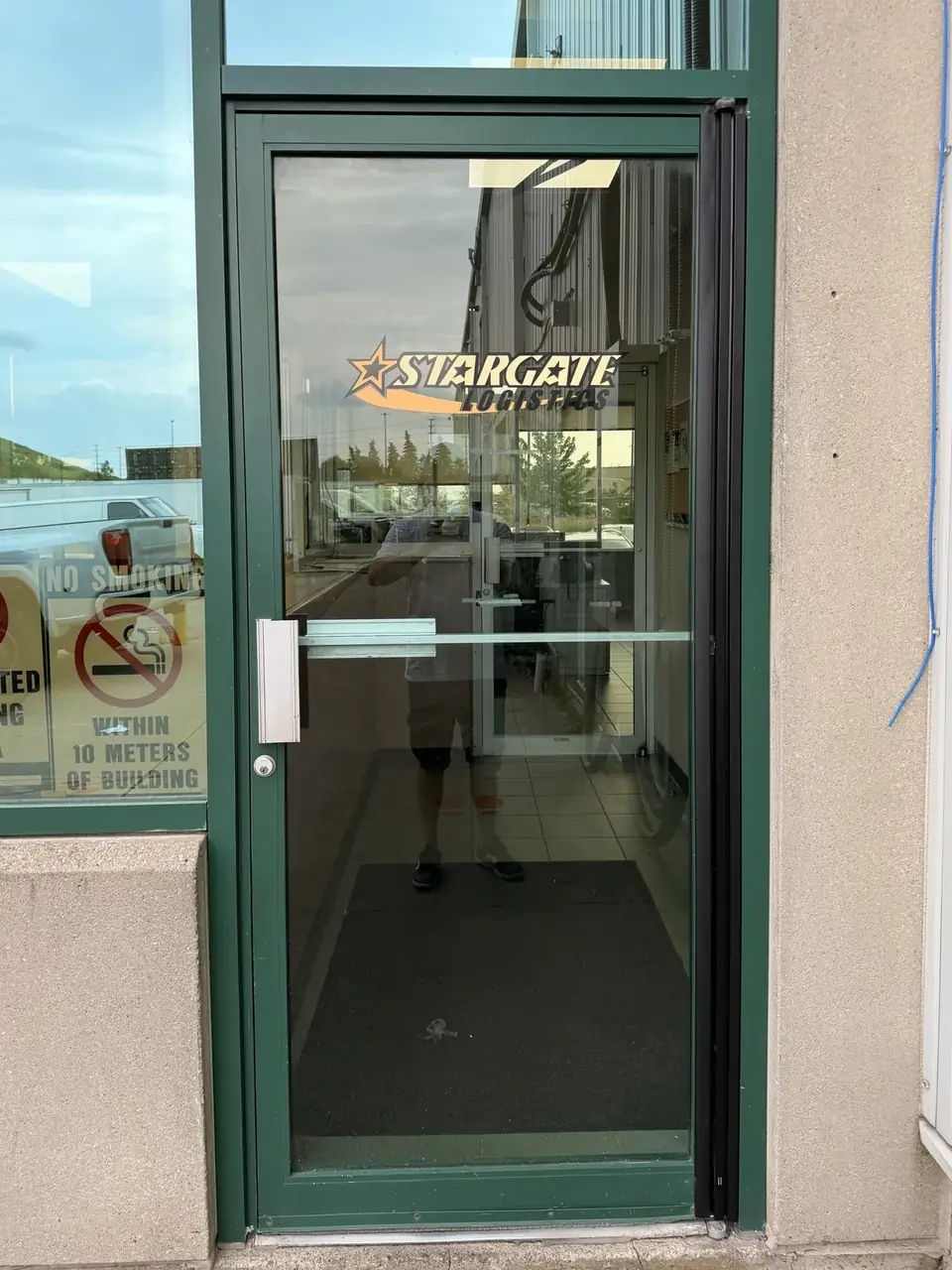
What this example shows: similar-looking doors need individual checks. One installation does not establish the fit or condition of the other opening.
Pickering · Existing hinge serviced
New glass—but not a new hinge
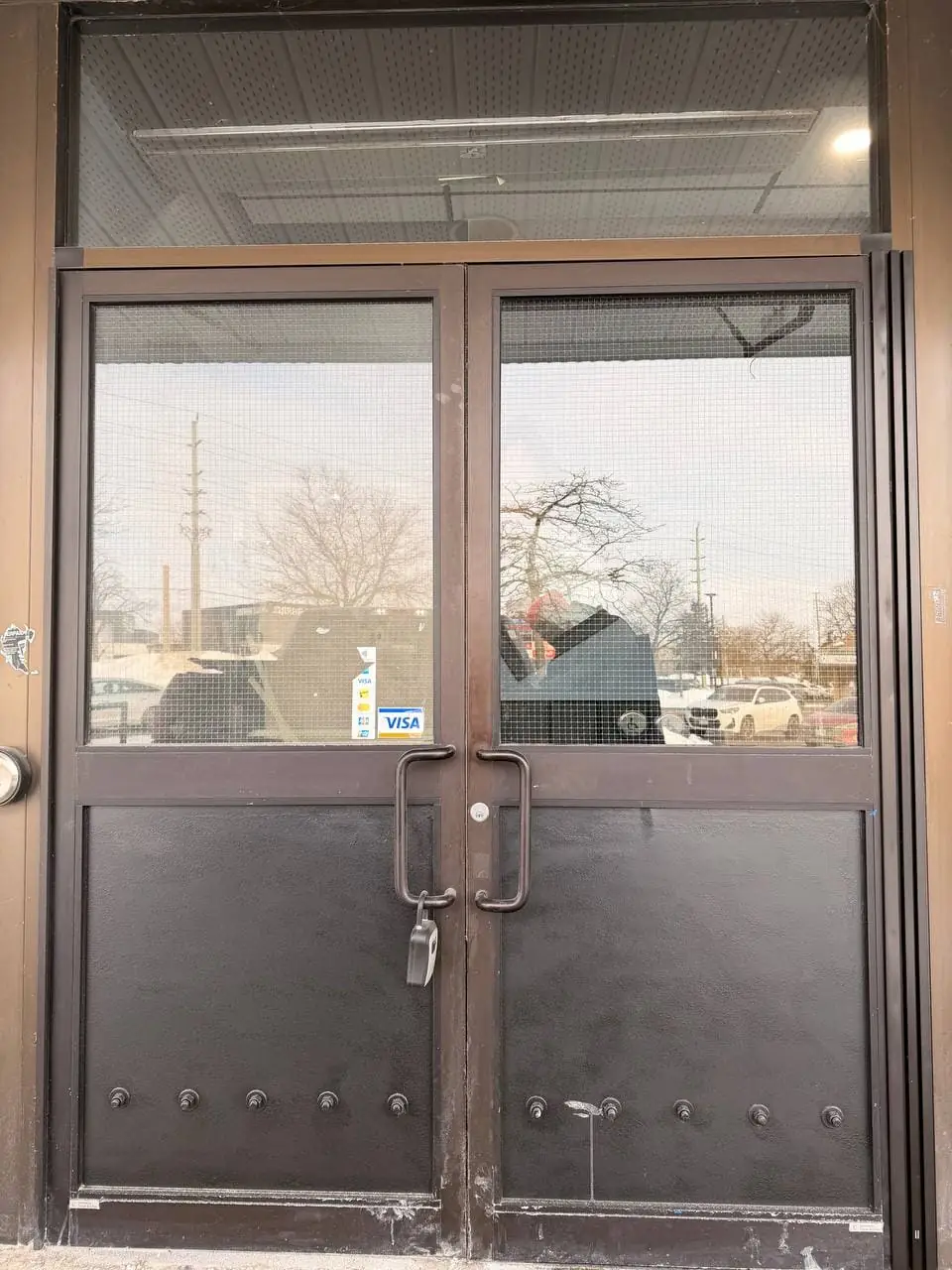
This Pickering entrance needed replacement GPW glass and work on its existing continuous hinge. We replaced the damaged glass, serviced the hinge already fitted to the door and checked movement and closing afterward.
The hinge was not replaced in this project. It belongs in this guide because it illustrates a different repair decision: a visible glass problem and a hardware issue can exist together, but neither automatically means every component needs replacement.
Glass replacement, hinge repair and door realignment should each be described according to the work actually required.
What we check after the door is realigned
A door that looks straighter is only part of the result. The final check should cover the way the opening is used:
- Support and clearances: the attachment is secure, and the door clears the frame and threshold without rubbing.
- Movement and closing: the leaf swings without binding; any closer is checked with the corrected door position.
- Latching and locking: the latch meets its strike, and the intended locking and exit hardware work without forcing the door.
- Connected parts: relevant sweeps, seals, the other leaf and any operator are checked for interference.
If a separate closer or lock fault remains, that needs its own repair. Our commercial door repair service assesses the opening as a system rather than assuming one replacement part will solve every symptom.
Which photos help us assess an alignment problem?
Send a full-door view, the hinge side from top to bottom, the rubbing corner or threshold, and a close-up of the latch and strike. Include the other leaf on a double door. A short video of normal operation is useful only when the door can be operated safely.
Tell us whether the problem started suddenly or gradually, whether the door can still lock, and whether it serves a shop, office, service room or residential entrance. Photos help us prepare; they do not replace an on-site check of loading, attachment and fit.
The quote depends on the repair, not just the visible symptom. Door size and weight, the compatible hinge, mounting condition, other failed parts and site access can change the scope. We confirm the work and price before proceeding; the single-visit Mississauga example is not a promise that every hinge job can be completed that way.
If the entrance cannot be secured or used safely, use our emergency commercial entrance service rather than waiting for a routine adjustment.
Questions about door alignment and hinge repairs
Can a sagging door be repaired without replacing it?
Often the existing door can remain when its frame and attachment conditions are suitable. Our Toronto and Richmond Hill examples involved new support hardware rather than a complete new entrance. An inspection determines whether that approach fits another opening.
Does every dragging door need a continuous hinge?
No. Adjustment, a compatible pivot or hinge repair, threshold work or door/frame repair may be more appropriate. The cause of rubbing must be identified first.
Is a continuous geared hinge the same as a piano hinge?
Not necessarily. “Continuous” describes its length. A geared hinge and a pin-and-barrel hinge have different operating constructions, and commercial suitability depends on the specific product and opening.
Will moving the strike fix a door that will not latch?
Only when the strike position is actually the problem. If the door has dropped because support hardware is worn, moving the strike alone does not correct the cause of that movement.
Can an existing continuous hinge be serviced instead?
Sometimes. In our Pickering project, the existing hinge was serviced alongside glass replacement; a new hinge was not installed. The condition and repairability of your hinge must be checked.
Do these commercial hinge examples apply to a front door at home?
The general need to check alignment still applies, but a residential entry may use different hinges, materials and frame construction. Use our front entry door service for that opening rather than assuming a commercial geared hinge is the right solution.
The useful question is not simply “Can this door be lifted?” It is “What will support this door correctly and let it move, close and latch as intended?” The projects above show why that answer can be adjustment, new hardware or service to a part already in place.
Send a photo and your location. We’ll respond with options and an estimated price.
Get an Estimate